 EN
EN  FR
FR 


Powered by ARTEFACT
Alumni Story: Thibaut adds Data Engineering expertise to his consultancy role
PROMO 2026
Thibaut Corallo
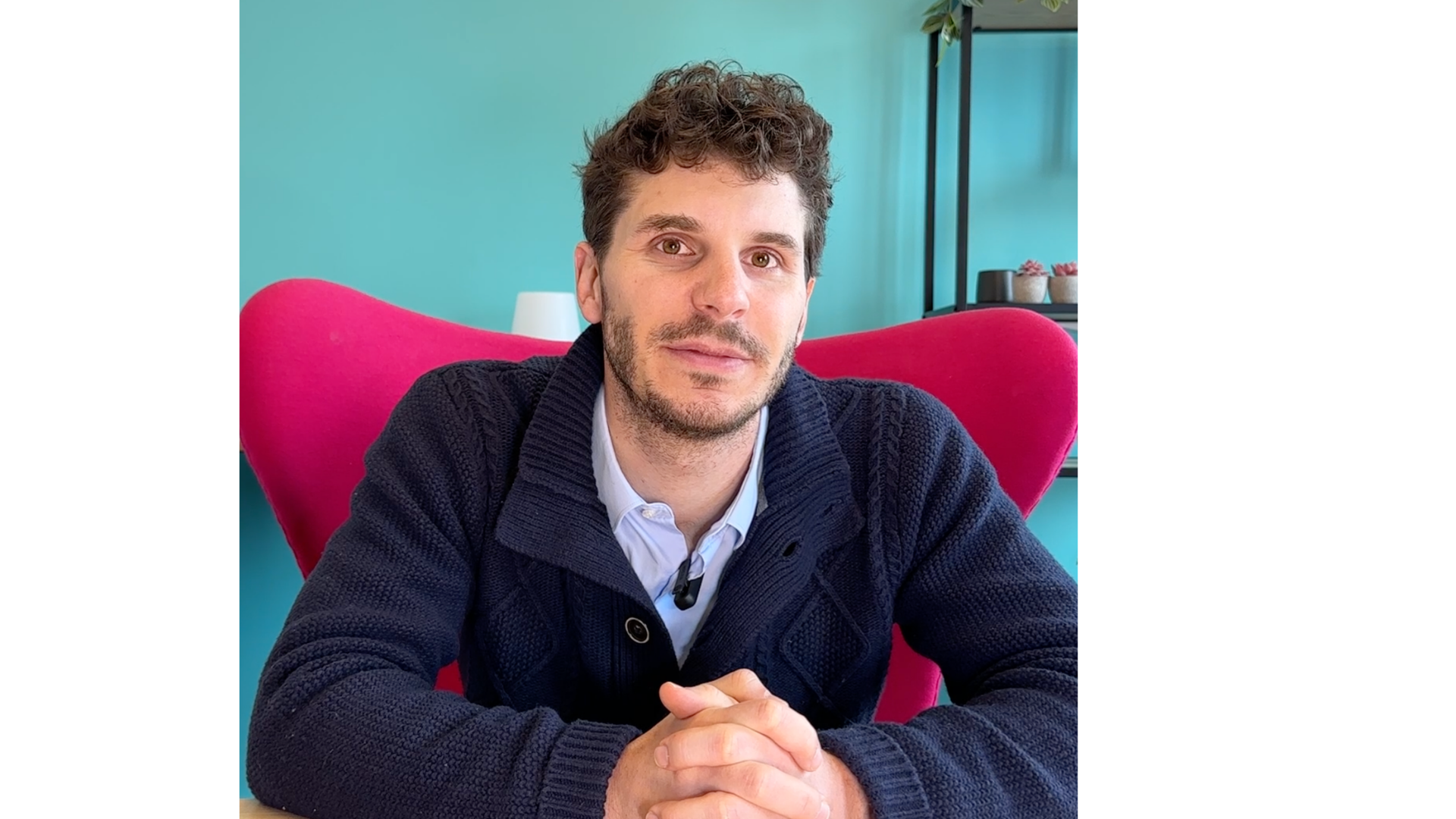
Discover the inspiring story of Thibaut Corallo, alumnus of the Data Engineering training !
What was your background before joining the Data Engineering course?
My name is Thibaut and I've been working at Artefact for three years now, and before that I was already doing consultancy work at Capgemini. My case is a bit special in that I'm already working for the company that's providing this training, and as at Artefact I'm working in the rather non-technical area of consulting, my aim was to make progress on the technical issues, which is why I wanted to do the training on the DE track.
What made you want to study Data Engineering?
In fact, in my day-to-day work at Artefact, there are two things. There are types of assignment where I have to interact with technical profiles, so it's often data engineers, but it can also be data scientists or data analysts. There's a second type of assignment, which is more strategic, where we also work with DEs, but more as experts and in a way that's perhaps a little less close-knit. Here our role is also to help clients move forward in a way that's a little more strategic and less about implementation, to make progress on certain issues, and here too it's interesting to have a little more technical knowledge to be in a better position to respond to the client's needs.
Why did you choose Artefact School of Data?
For me it's a bit of a no-brainer in that I already work at Artefact, so I found it interesting to do it in an ecosystem I know, with people I know. Beyond this argument of ease, there's also the fact that Artefact isn't just a training institute, it's also a data and AI consultancy, so they're very close to the issues that companies are facing today. So by doing the school with Artefact, I was certain that the programme really responded to the issues in the field and to what we see with our customers.
How would you describe your experience at the School of Data and the Data Engineering Bootcamp?
So it was a very good experience and what I really liked was the good balance between theory and practice. The way it works is that a typical day consists of a morning lesson where we cover all the theoretical elements that will then be needed to do the exercises that come afterwards. And then, after these lessons during the day, we have exercises to do in the TD format, where we can ask our instructors for help at any time. So this format is very useful, because every day it's fairly structured, every day you learn these theoretical elements and then you're immediately encouraged to put them into practice with the support of the instructor, so in my opinion it's the best way to make progress on these subjects.
What skills or tools did you learn during the course?
So there are a lot of things, especially as the Data Engineer course is perhaps the densest, covering the most tools. Basically, of course, there's a lot of Python, and it was part of the preparatory work to consolidate our knowledge of Python. We also learnt how to do Spark, that sort of thing, and we saw a lot of things about the technologies that can be used to host solutions, so from the most basic, for example with virtual machines and how to use virtual machines, to everything to do with containerisation with Docker, everything to do with orchestrating several containers with Docker Compose and that sort of thing. What's more, we've also done a lot of work on agentic frameworks, so with Langraph and that sort of thing, and we've also worked on the more ML part. I'm probably forgetting a lot of things because we've really seen a lot of things, but these types of elements.
How would you describe Artefact's teaching methods?
Once again, the particularity of the teaching method is that all the courses are run with a desire to be close to the field and close to what our clients and consultants bring back to us. I say we, and I'm speaking both as a student and as someone who belongs to Artefact. So you can feel it, and so it's a very concrete learning methodology. There's a real theory part, but above all there's a big practical part where you systematically try every day to put into practice what you've learnt, and I think that's the most important part. Perhaps there's also something I hadn't mentioned, and that's the links that are made between the real training activity, where you learn things, and the consultancy side of Artefact. At the school, during the five weeks of training, you will take part in talks by consultants, data engineers in particular, but also data scientists or even consultants who will explain to us what their missions were, what technological challenges they have encountered recently on mission. So all this gives a very concrete aspect to what we learn on a day-to-day basis in the school because we really understand the things that these technical profiles encounter and so it helps us to project ourselves onto the job. In my case, as I was doing this course not with the aim of changing jobs but more to understand the technical side, it enabled me to build bridges between my activity and that of my data engineer colleagues. But I also think that for all the people who aspire to become data engineers, it really gives them something concrete to get their teeth into and helps them understand what's required in the job.
How has this training enabled you to plan your future career?
My current career is as a data consultant, so we often work alongside experts who really get their hands dirty and have this expertise. But the fact that I've had this fairly technical training means that I have a much better understanding of the issues behind the concepts that I deal with on a day-to-day basis, and I hope that this will enable me to be more relevant in the future when I'm working with customers to solve certain problems or even upstream of working with customers when I'm doing what we call project sizing, i.e. estimating the load required to accomplish a given task. In fact, having this slightly more technical background gives me a better understanding of what is required, how much effort, how many weeks, what activities are needed to achieve this or that goal and that, in the end, makes it easier to design projects and be sure that we're providing a system that meets the customer's needs.
What would you say to someone considering a Data Engineering course at the School of Data?
A person with the same profile as me, well the first thing is not to be too scared. Admittedly, by doing this you change your mind a bit and move on to the technical side of things, whereas you were more interested in project management, but the teaching system provided by Artefact means that it works well and that you learn progressively, and admittedly at the beginning you have to get into it a bit, but you shouldn't be too scared by that. The first thing is to have confidence in yourself, it can work very well and that's great. The second thing is that the question I asked myself before doing this training was whether it was really necessary for my work, since I was doing it today and didn't have this training. The coming weeks will allow me to answer that question with more certainty, but at the very least what I can say is that it's really interesting to see in concrete terms the things you're working with. Now when I'm working on a data strategy project where we're going to say, for example, that we need to set up a data warehouse or we need to train this or that model, I understand much better what that means and so it really helps to put something concrete behind the words and a fortiori it's a lot easier when you're working with these technical profiles.
One word to describe the School of Data?
Terrain. Why is terrain important? Because we're in a world that's particularly fluid. In fact, a year ago, technologies in generative AI in particular were much less mature than they are today, there are things that we didn't envisage and even in six months' time there are things that change enormously. So I think it's particularly rewarding for Artefact to be able to offer training courses by acting as a link between the training institute and the consultancy firm, which sees things happening in all sectors and in all companies on a day-to-day basis, because technological change is really at stake, and that means we can make sure that the training programme is really in line with what we're seeing.
Discover the success stories of our alumni


 Olivier Iberti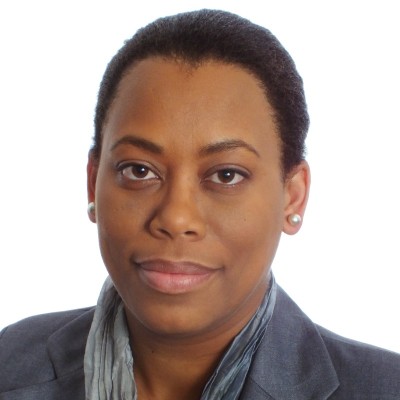



Get our training programme

Bootcamp
About you
Thibaut Corallo
remaining space
from at
Thank you for your application.
Next steps


Choose your session
Receive our detailed programme by email:
FAQ
Do you have any other questions about Artefact School of Data? We'd love to hear from you.
What is the difference between Artefact School of Data and other courses?
World-renowned learning and a unique educational experience. More than 5,000 students around the world have been trained by our experts atArtefact. You will benefit from immersion training with one of the world leaders in Data & AI, who will share their expertise with you. Every day, you'll learn from real-life cases you've worked on with some of the world's biggest companies.
How do I apply for our courses?
The registration process is very simple: you apply directly for the course of your choice, explaining your motivation and describing your career path. You can also download our full programme and make an appointment with our team.
How can I finance my training?
There are a number of funding solutions available to you: personal funding (in one or more instalments), use of your Personal Training Account (CPF), assistance from Pôle emploi, funding via your company's OPCO if you are in post, Professional Transition Project (PTP), Agefiph, etc. As each professional project and each funding application is unique, we offer you a personalised meeting to answer all your questions and help you through the process. You can also watch a video showing all the financing options available.
Are the courses face-to-face or distance learning?
We recommend taking the course face-to-face, in order to take full advantage of the learning environment within a leading player in Data and Artificial Intelligence, and to benefit from direct exchanges with the trainers and other participants.
However, for greater flexibility, our courses can also be taken at a distance or in a hybrid format. Every effort is made to ensure that you can participate in the best possible conditions, either from our classroom or from home, depending on your preference. This flexible format has been designed to optimise your learning throughout the course.
Who are the speakers at Artefact School of Data?
The lecturers at Artefact School of Data are senior Data Scientists, Data Analysts and Data Engineers. They all work forArtefactone of the world leaders in data. Thanks to their day-to-day work with Artefact's customers, they are confronted with the real and current issues faced by companies. This proximity to the field means that we can offer training that is rooted in the reality of data projects, built on their experience and the challenges they face every day.
Are our training courses Qualiopi certified?
Our training courses are certified "Qualiopi pour l'action de formation".
What support is there to help you find a job?
Every day, our students have the opportunity to work alongside Artefact employeesone of the leaders in the data industry. This means that every day, they meet Data Scientists, Data Analysts, Data Engineers and Data Marketing experts, who make up their team. professional network and increase their chances of securing a future position with Artefact or from one of our partners.