 EN
EN  FR
FR 

Powered by ARTEFACT
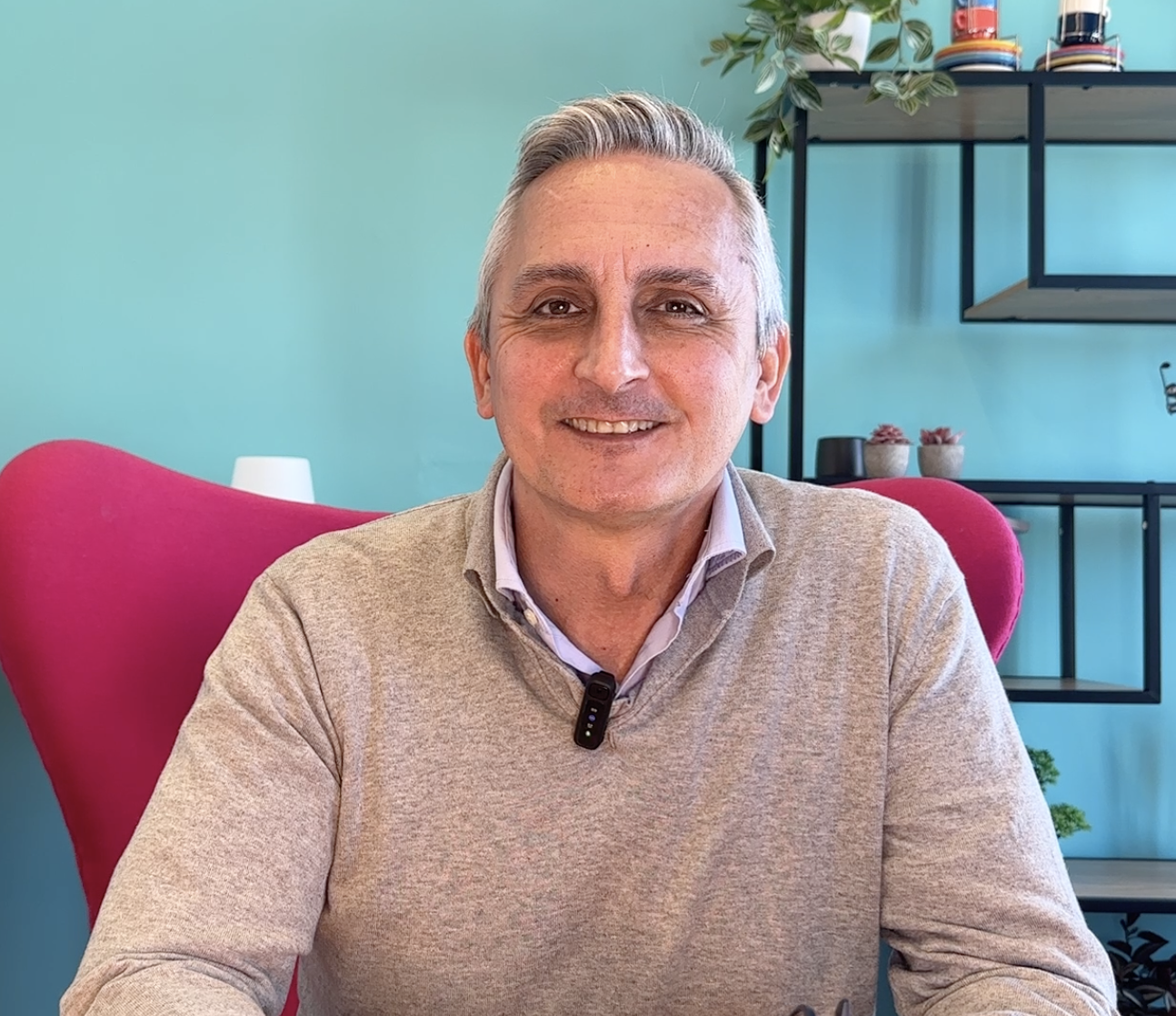
Alumni Story: Fabrice adds Data Science to his entrepreneurial journey
PROMO 2026
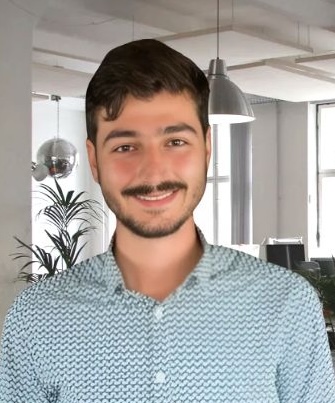
Fabrice Moncaut
Discover the inspiring testimony of Fabrice, alumni of the Data Science & AI training !
What was your background before joining the Data Science & AI course?
My career path is a bit old now, about thirty years, where I first worked in retail operations in France, then abroad, in the United States, and I mainly supported these groups when they came to France in the really operational part, opening shops and developing networks. My second life was in marketing management, where I started to get to grips with data, spreadsheets, complicated Excel spreadsheets, pricing, all kinds of subjects. And that was the second part. I've spent the last ten years working in retail, in retail tech, developing both e-commerce solutions and, more recently, a solution for a local marketplace, a form of Amazon, for local shops.
Why did you decide to train in Data Science & AI?
There's already a buzzword around data and AI, which we hear every day. The question is that throughout my career, I've liked to get under the bonnet, to try and understand the tools, because in fact my job is to provide solutions, so it's about finding the leverage effects. And data is an important element, there's also an element, so behind the buzzword, what's behind it? So that was the idea behind the training. After that, I've also reached a point in my career where I was missing that technological brick. I've managed tech teams, and it's all well and good to brief them, but I've always been interested in getting under the bonnet. So I did it in the last project, on AWS, on a whole range of subjects, on PIM. But when it comes to AI, it's a new tactical approach, we're moving from an intelligent data model to a model, we can model, we can make predictions, we can industrialise the process a lot more, and that's what interests me in training, and that's where it comes in at just the right time.
Why was it important for you to take a training course leading to certification, rather than learning on your own or informally?
So, it's always interesting to be as close as possible, and when we say lift the bonnet, we mean I can do it remotely. In any case, I think I'll be returning to a lot of the subjects we've been talking about over the last three months, thanks to the portal, because all the documentation is still accessible after the course. The important thing is to get your hands dirty, to get out of your comfort zone, to confront your ideas with people who are completely different, often coming from the tech world. So with my slightly different profile, it allowed me to bring in a bit of that business aspect, and so to really get to the heart of the matter, rather than just skimming over it. For me, AI was all about LLMs, and in fact, behind that, I learnt that it's much more complex than that, it's much more strategic than that, and it has real leverage effects for the business of today and tomorrow.
What convinced you to choose Artefact School of Data?
Google! Yes and no, actually. In fact, Artefact has a special feature. So when I was first told about it, I really didn't know anything about it. I did a bit of research, and the recommendations on Google are really extraordinary. So I said to myself, this isn't a course like any other. I've done a few where there's a lot of discussion, but you don't get down to the nitty-gritty, you don't really get into the analysis. So this course was unique in that it was run by Artefact, which, when you get right down to it, is not an academic school, but rather a major operational unit in data science and AI. So there's a business approach that already exists through its consulting, through all that. So sharing the mix of business and technology is exactly what suited me, and Artefact was the right choice for me, bearing in mind that behind the scenes we met some very good people and contacts.
How did you experience the bootcamp as an experienced profile?
Let's just say I approached it having done the groundwork on places I'd never coded in my life. Instead, I was explaining to people the interest I needed in solutions. So that was a shock. It's a good thing I've got grey hair and I'm not losing it, otherwise I'd have more. It's very intense. So that's what's special about bootcamp, is that you have to jump on the bandwagon very quickly, you get out of your comfort zone very quickly. That's really essential. And you quickly get your hands dirty, with the speakers coding live and you correct them live. It's all interactive and that's what makes it so special. So it's very intense. So you shouldn't just turn up by chance. You have to know what you're getting into. But we were warned about this a bit in advance. In my opinion, it's a bit too fast for my profile, especially if you haven't done Python coding or ASQL for a long time. Even with the basics, it's not enough. But on the other hand, you quickly grasp the concepts, you quickly get into the models. So you're still able to catch on quickly. My advice would be that you need a bit more time. In other words, after these three months, I'm really going to continue with the practical cases, working on everything I've learnt and reinforcing it.
What stood out for you in terms of the teaching methods, the pace and the exchanges with the other participants?
So, what was interesting, as I say, was that often, the team, there were twelve of us, I think, we really have different profiles, except that I was perhaps the most atypical, with another student. I've been involved with techno all my life, but I've never really had to get my hands dirty, whereas that's what the others do. So this group synergy was very interesting. What was also interesting was to see that experts, in any case, other people in training, were following the pressure. In other words, we were all hanging on because it was so interesting. So you can see that the process is intense, hyper-technical, hyper-powerful, and after that, you still have to go at your own speed. So there you have it, the richness is of course the mix of that group, which was pretty fantastic.
How does this training change the way you work or think about your projects?
The School of Data in a nutshell?
Discover the success stories of our alumni
 Olivier Iberti


Get our training programme

Bootcamp
About you
Fabrice Moncaut
remaining space
from at
Thank you for your application.
Next steps


Choose your session
Receive our detailed programme by email:
FAQ
Do you have any other questions about Artefact School of Data? We'd love to hear from you.
What is the difference between Artefact School of Data and other courses?
World-renowned learning and a unique educational experience. More than 5,000 students around the world have been trained by our experts atArtefact. You will benefit from immersion training with one of the world leaders in Data & AI, who will share their expertise with you. Every day, you'll learn from real-life cases you've worked on with some of the world's biggest companies.
How do I apply for our courses?
The registration process is very simple: you apply directly for the course of your choice, explaining your motivation and describing your career path. You can also download our full programme and make an appointment with our team.
How can I finance my training?
There are a number of funding solutions available to you: personal funding (in one or more instalments), use of your Personal Training Account (CPF), assistance from Pôle emploi, funding via your company's OPCO if you are in post, Professional Transition Project (PTP), Agefiph, etc. As each professional project and each funding application is unique, we offer you a personalised meeting to answer all your questions and help you through the process. You can also watch a video showing all the financing options available.
Are the courses face-to-face or distance learning?
We recommend taking the course face-to-face, in order to take full advantage of the learning environment within a leading player in Data and Artificial Intelligence, and to benefit from direct exchanges with the trainers and other participants.
However, for greater flexibility, our courses can also be taken at a distance or in a hybrid format. Every effort is made to ensure that you can participate in the best possible conditions, either from our classroom or from home, depending on your preference. This flexible format has been designed to optimise your learning throughout the course.
Who are the speakers at Artefact School of Data?
The lecturers at Artefact School of Data are senior Data Scientists, Data Analysts and Data Engineers. They all work forArtefactone of the world leaders in data. Thanks to their day-to-day work with Artefact's customers, they are confronted with the real and current issues faced by companies. This proximity to the field means that we can offer training that is rooted in the reality of data projects, built on their experience and the challenges they face every day.
Are our training courses Qualiopi certified?
Our training courses are certified "Qualiopi pour l'action de formation".
What support is there to help you find a job?
Every day, our students have the opportunity to work alongside Artefact employeesone of the leaders in the data industry. This means that every day, they meet Data Scientists, Data Analysts, Data Engineers and Data Marketing experts, who make up their team. professional network and increase their chances of securing a future position with Artefact or from one of our partners.