 EN
EN  FR
FR 

Powered by ARTEFACT
Alumni Story: Jaimes accelerates its transition to Data Science & AI
PROMO 2026
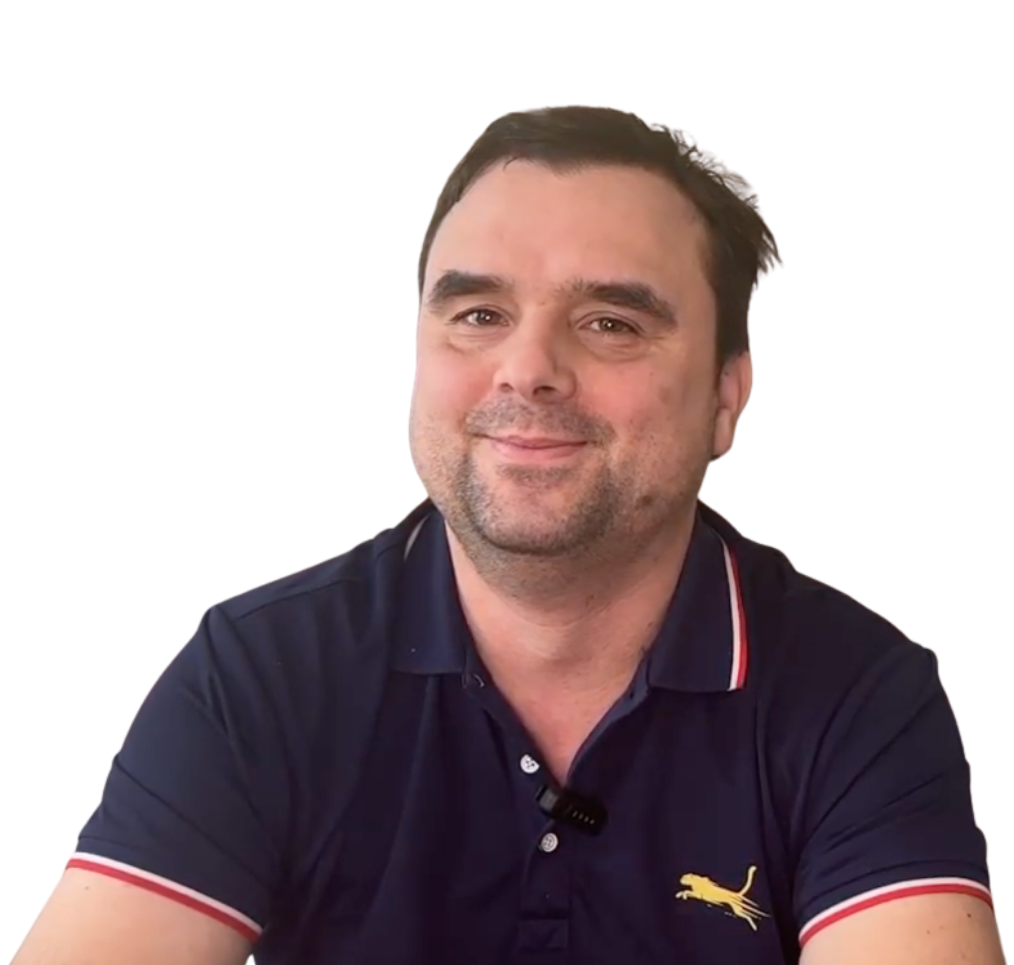
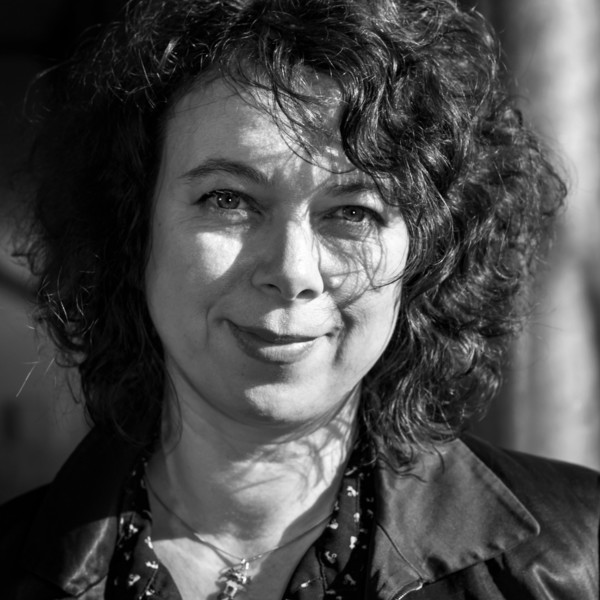
Jaimes De Sousa Gomes
Read the inspiring testimonial from Jaimes, an alumnus of the Data Science & AI training !
What was your background before joining the Data Science & AI course?
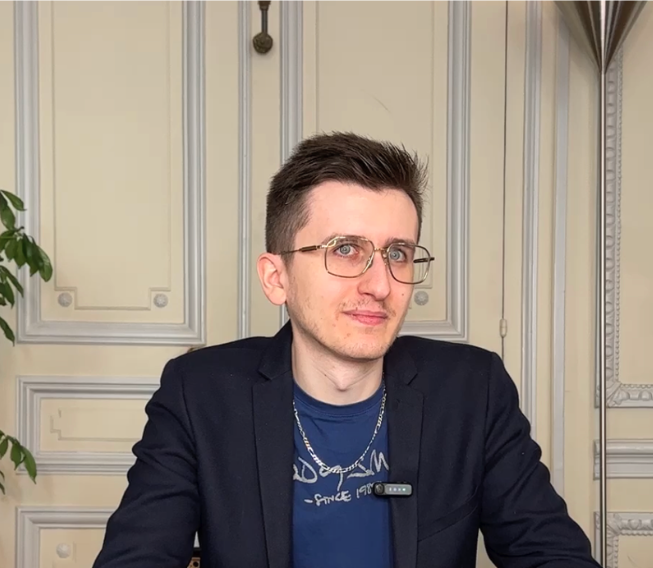
My name is Jaimes de Sousa Gomes, I'm 36 years old, I did a fairly classic Maths Sup, Maths Spé, then I went to school at Efrei, a computer science school based in Villejuif. I did my three years of engineering there in Special Robotics, and then I worked for over seven years in an IT services company developing mobile applications before going to the United States for three years, fully teleworking to be exact, but working for a company in the United States that worked in the medical sector, again developing mobile applications. As a result, I've been trying for a little over a year to find a new direction, so I thought why not go into data and in particular everything to do with artificial intelligence, which is what brought me here to Artefact.
What made you want to take the plunge and move into data and AI?
So, quite simply, AI is a growth sector, so there are quite a few jobs in it, and it impacts everyone, so it's something that I think is very interesting to put in your portfolio, on your CV, and even more so in this field. I'm very interested in the field of medicine, so data and artificial intelligence seemed to be the obvious choice. I came across this course and thought I might as well go for it.
Why did you choose Artefact School of Data?
I had done a benchmark of all the... a good proportion, I wouldn't say all, because I don't claim to have looked at everything, but I had seen a good proportion of the training courses specifically in everything to do with artificial intelligence, the creation of artificial intelligence, and the benchmark showed me that overall it was the one with the best marks and which had the most visibility, in inverted commas, both internationally and in France. So I said to myself, if we're going to have a course, we might as well have one that's being promoted by one of the French unicorns, which is Artefact. And having an in-house school is not bad. It gives it prestige.
How would you describe your experience at the School of Data?
So very interesting, very intense. There's a lot of work. I think it's a ten-week course, so there's a lot to learn. Every day we go over different things. You don't necessarily have enough distance to understand and grasp everything in the process. It's going to take a lot of work upstream and downstream, I think, just to acquire 100 % knowledge. But it's very comprehensive, and the two-week end-of-studies project is really interesting for that, because it allows us, with a group of other people who have done the course, to set up the whole process from A to Z, from data recovery to setting up the artificial intelligence platform, which again looks very good on a CV.
What skills or tools did you learn or reinforce during the course?
Ah, there are lots of them. I was already an engineer, so we were able to pick up some knowledge of Python. For people who hadn't done it, it's very important to at least have the basics to read it, because Vibe Coding is all very well, but if you don't understand what's going on, it's not as interesting. And then after that, we were able to use TensorFlow, Pytorch, all the tools for creating artificial intelligence models, how to retrieve them, how to train them, and how to implement them on sites, buckets and so on. So it's very cross-disciplinary, and it allows you to see just about the entire process of the data scientist's job, from data collection to implementation on the Internet. So yes, making a list of everything we've learnt is likely to be a bit long. In any case, all you have to do is look at the training documentation to find out what's there.
Can you tell us about a project you did during the bootcamp?
The School of Data in a nutshell?
Discover the success stories of our alumni
 Olivier Iberti


Get our training programme

PROMO 2026
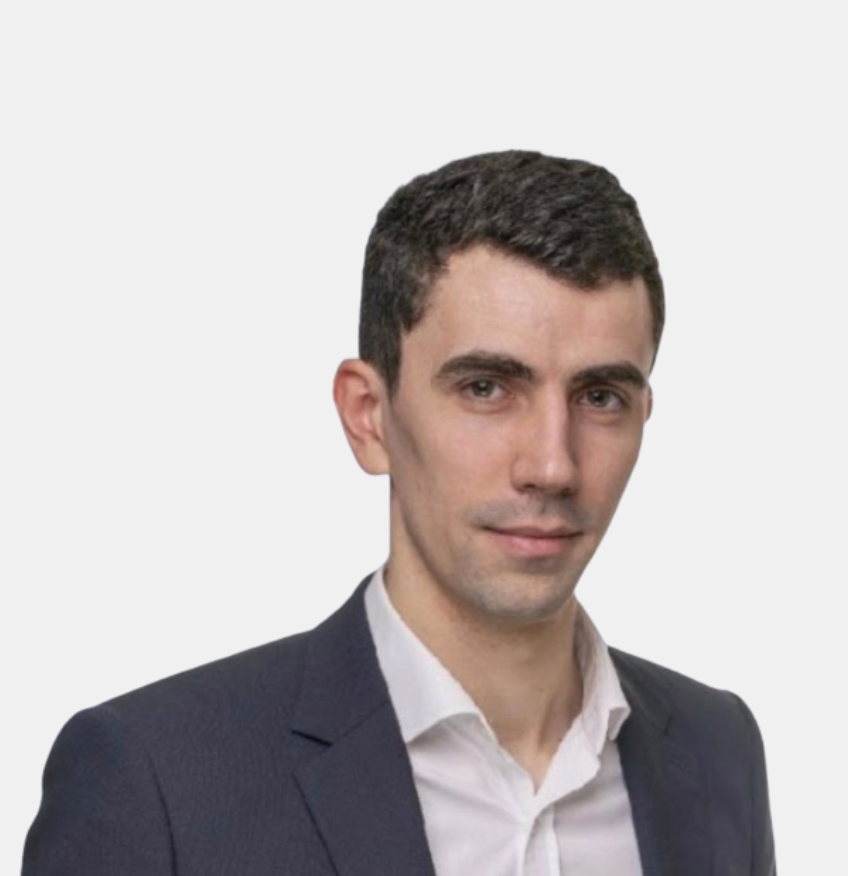
Thomas Hebert
Read the inspiring testimonial from Jaimes, an alumnus of the Data Science & AI training !
What was your background before joining the Data Science & AI course?
My name is Thomas, I'm 26 and I'm a graduate of the Android Master's programme at Sorbonne University. It's a Master's degree that deals with AI applied to robotics, virtual environments, multi-agent systems and decision support. Before taking this course, I was an innovation financing consultant for companies. The difference is that my Masters is more focused on innovation and research. At the time, when I had to choose my Master's degree, I had the choice between that and a Master's degree that was more data-oriented. I chose the core option, bearing in mind that when I did my research, which was four years ago now, the market was different from today. There were more prospects, more jobs, quite a few companies booming. And then there were quite a few differences compared to today. They recruited a lot of juniors, so there's less room for them on the market today. And then AI came along, which changed quite a lot the way we react to offers, and how we rethink different jobs. And today, it's a lot more mixed jobs between research, data and senior positions that are more in demand. So I need to be able to increase my range of skills to adapt to today's market.
What didn't your Master's degree give you that you were looking for in this course?
My Master's was very theoretical, very much into the different formulas, learning the different concepts, sometimes perhaps a little behind the times compared to what we were seeing in the field and very research-oriented, perhaps even a little too much so. In other words, if you didn't do a thesis at the end of the Master's, it was still a bit complicated to find a job, bearing in mind that I graduated in 2024, so it was a bit difficult. The data part, on the other hand, is something that is more business-oriented nowadays, that has a greater real-world focus, and that is still very much in demand. And that's not something I saw at all in my Masters, so I really needed to do that.
Why did you choose Artefact School of Data?
I had done a benchmark of all the... a good proportion, I wouldn't say all, because I don't claim to have looked at everything, but I had seen a good proportion of the training courses specifically in everything to do with artificial intelligence, the creation of artificial intelligence, and the benchmark showed me that overall it was the one with the best marks and which had the most visibility, in inverted commas, both internationally and in France. So I said to myself, if we're going to have a course, we might as well have one that's being promoted by one of the French unicorns, which is Artefact. And having an in-house school is not bad. It gives it prestige.
How would you describe your experience at the School of Data?
So very interesting, very intense. There's a lot of work. I think it's a ten-week course, so there's a lot to learn. Every day we go over different things. You don't necessarily have enough distance to understand and grasp everything in the process. It's going to take a lot of work upstream and downstream, I think, just to acquire 100 % knowledge. But it's very comprehensive, and the two-week end-of-studies project is really interesting for that, because it allows us, with a group of other people who have done the course, to set up the whole process from A to Z, from data recovery to setting up the artificial intelligence platform, which again looks very good on a CV.
What skills or tools did you learn or reinforce during the course?
Ah, there are lots of them. I was already an engineer, so we were able to pick up some knowledge of Python. For people who hadn't done it, it's very important to at least have the basics to read it, because Vibe Coding is all very well, but if you don't understand what's going on, it's not as interesting. And after that, we were able to use TensorFlow, Pytorch, all the tools for creating artificial intelligence models, how to retrieve them, how to train them, and how to implement them on sites, buckets and so on. So it's very cross-disciplinary, and it allows you to see just about the entire process of the data scientist's job, from data collection to implementation on the Internet. So yes, making a list of everything we've learnt is likely to be a bit long. In any case, all you have to do is look at the training documentation to find out what's there.
Can you tell us about a project you did during the bootcamp?
The School of Data in a nutshell?
Bootcamp
About you
Jaimes De Sousa Gomes
remaining space
from at
Thank you for your application.
Next steps


Choose your session
PROMO 2026
Thomas Hebert
Read the inspiring testimonial from Jaimes, an alumnus of the Data Science & AI training !
What was your background before joining the Data Science & AI course?
My name is Thomas, I'm 26 and I'm a graduate of the Android Master's programme at Sorbonne University. It's a Master's degree that deals with AI applied to robotics, virtual environments, multi-agent systems and decision support. Before taking this course, I was an innovation financing consultant for companies. The difference is that my Masters is more focused on innovation and research. At the time, when I had to choose my Master's degree, I had the choice between that and a Master's degree that was more data-oriented. I chose the core option, bearing in mind that when I did my research, which was four years ago now, the market was different from today. There were more prospects, more jobs, quite a few companies booming. And then there were quite a few differences compared to today. They recruited a lot of juniors, so there's less room for them on the market today. And then AI came along, which changed quite a lot the way we react to offers, and how we rethink different jobs. And today, it's a lot more mixed jobs between research, data and senior positions that are more in demand. So I need to be able to increase my range of skills to adapt to today's market.
What didn't your Master's degree give you that you were looking for in this course?
My Master's was very theoretical, very much into the different formulas, learning the different concepts, sometimes perhaps a little behind the times compared to what we were seeing in the field and very research-oriented, perhaps even a little too much so. In other words, if you didn't do a thesis at the end of the Master's, it was still a bit complicated to find a job, bearing in mind that I graduated in 2024, so it was a bit difficult. The data part, on the other hand, is something that is more business-oriented nowadays, that has a greater real-world focus, and that is still very much in demand. And that's not something I saw at all in my Masters, so I really needed to do that.
Why did you choose Artefact School of Data?
So at first I didn't know anything about it. When I was in post last year, I got my first email in June from France Travail promoting the school. It intrigued me at the time, except that I was in post, I was in the middle of my trial period, so I couldn't really do that. I thought maybe later, one day, if I ever needed it. And then in September, I had left my job by then and France Travail sent me the same email with new dates for the webinar. So I took that as a sign. And then I thought, given that at the moment I've got nothing to do and I know that it's going to be difficult to find work, knowing that I was looking for a much more technical job, one that was much closer to what I did in my Masters rather than what I did in my old job. I thought that this might be a good time to increase my skills and be much more competitive on the market.
How would you describe your experience at the School of Data?
I found it very interesting, bearing in mind that I'm not at all used to the Bootcamp format. It's something I didn't know anything about. I've always taken a very traditional route in terms of my studies. I didn't even do a sandwich course or anything. It's always been a straight line, you could say. So it's true that this aspect was very new for me. And I found it very interesting because you're much more in touch with reality, much more involved in rapid learning, whereas on traditional courses you do a lot of theory, always studying all the formulae and mathematics behind it, over long weeks, even months. In this case, we really needed to be able to get to grips with the concepts, even for people who had no grounding in the field, quickly in two and a half months. So I found it very intensive, but still very interesting and now much closer to the reality of the business, because we're basing ourselves on technologies that are fairly recent and on areas that are very much in demand today in the various offers.
What skills or tools did you learn during the course?
In terms of my skills above all, and quite a few skills that I didn't have at all, firstly data analysis. I'd done a bit of it in my undergraduate degree, but it was still relatively limited. Here, we really saw the importance of data analysis, how to go about it, the different points to be taken into account, the different dangers, what could affect the learning of models, etc. I also honed my SQL skills a bit. Likewise, I'd seen it at undergraduate level, but it's something I hadn't done for a while and I felt a bit weak in it. So this enabled me to work on it again. We've also been able to gain more skills in machine learning, because with my Master's degree, I had some, obviously, we do some. But it's not the same kind of machine learning that we do. We're more into what we call reinforcement-based machine learning, where little autonomous agents learn from their mistakes by themselves to try and get a reward. Here, we're really looking to do something guided, supervised, or even something a little deeper in deep learning to process pure data and make either predictions or classifications to get a final result that's important for the business. So that's quite a change. It means that between my course and the bootcamp, I can see the whole of machine learning with everything I've learned. The same goes for deep learning, something I've only seen half of, so to speak. And then there's a part that I hadn't done at all, the engineering part, which is very much in demand these days, from what I've seen on the Internet, the whole part where you want to build pipelines, where everything is automated, you can deploy in the cloud, etc. And then make the various applications available to the public. Then we can make the different applications or models available to companies so that they can make their predictions automatically without having to go back into the code and run programs manually. That's something I hadn't seen at all, because once again, my training was very theoretical, so there was no business reality behind it. So that really helped me to realise how important that part is.
Can you tell us about a project you did during the bootcamp?
The School of Data in a nutshell?
Receive our detailed programme by email:
FAQ
Do you have any other questions about Artefact School of Data? We'd love to hear from you.
What is the difference between Artefact School of Data and other courses?
World-renowned learning and a unique educational experience. More than 5,000 students around the world have been trained by our experts atArtefact. You will benefit from immersion training with one of the world leaders in Data & AI, who will share their expertise with you. Every day, you'll learn from real-life cases you've worked on with some of the world's biggest companies.
How do I apply for our courses?
The registration process is very simple: you apply directly for the course of your choice, explaining your motivation and describing your career path. You can also download our full programme and make an appointment with our team.
How can I finance my training?
There are a number of funding solutions available to you: personal funding (in one or more instalments), use of your Personal Training Account (CPF), assistance from Pôle emploi, funding via your company's OPCO if you are in post, Professional Transition Project (PTP), Agefiph, etc. As each professional project and each funding application is unique, we offer you a personalised meeting to answer all your questions and help you through the process. You can also watch a video showing all the financing options available.
Are the courses face-to-face or distance learning?
We recommend taking the course face-to-face, in order to take full advantage of the learning environment within a leading player in Data and Artificial Intelligence, and to benefit from direct exchanges with the trainers and other participants.
However, for greater flexibility, our courses can also be taken at a distance or in a hybrid format. Every effort is made to ensure that you can participate in the best possible conditions, either from our classroom or from home, depending on your preference. This flexible format has been designed to optimise your learning throughout the course.
Who are the speakers at Artefact School of Data?
The lecturers at Artefact School of Data are senior Data Scientists, Data Analysts and Data Engineers. They all work forArtefactone of the world leaders in data. Thanks to their day-to-day work with Artefact's customers, they are confronted with the real and current issues faced by companies. This proximity to the field means that we can offer training that is rooted in the reality of data projects, built on their experience and the challenges they face every day.
Are our training courses Qualiopi certified?
Our training courses are certified "Qualiopi pour l'action de formation".
What support is there to help you find a job?
Every day, our students have the opportunity to work alongside Artefact employeesone of the leaders in the data industry. This means that every day, they meet Data Scientists, Data Analysts, Data Engineers and Data Marketing experts, who make up their team. professional network and increase their chances of securing a future position with Artefact or from one of our partners.